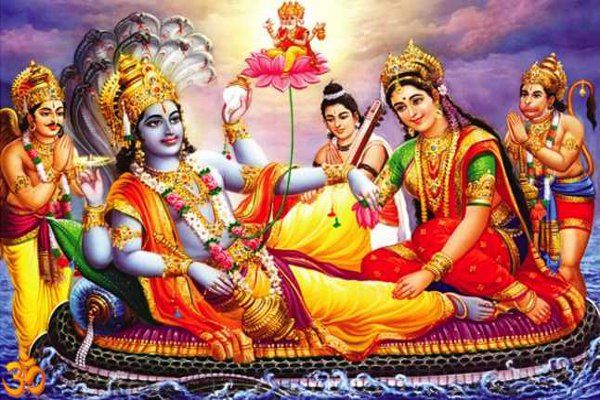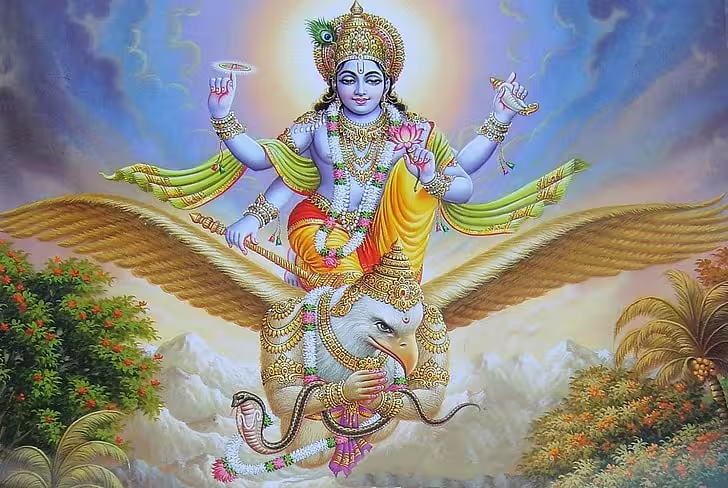
तुलसी शालिग्राम विवाह हिंदू धर्म की एक पवित्र परंपरा है, जिसमें माता तुलसी का विवाह भगवान विष्णु के शालिग्राम स्वरूप के साथ कराया जाता है। इस दिव्य विवाह के पीछे माता वृंदा, जालंधर, तुलसी और शंखचूड़ से जुड़ी पौराणिक कथाएँ प्रचलित हैं।
ॐ श्री मत्पंकजविष्टरो हरिहरौ, वायुमर्हेन्द्रोऽनलः।
चन्द्रो भास्कर वित्तपाल वरुण, प्रताधिपादिग्रहाः।
प्रद्यम्नो नलकूबरौ सुरगजः।
चिन्तामणिः कौस्तुभः।
स्वामी शक्तिधरश्च लांगलधरः।
कुवर्न्तु वो मंगलम् ॥
Every year, during the sacred month of Kartik, Hindu devotees celebrate Tulsi Vivah, the ceremonial marriage of the holy Tulsi plant with Lord Vishnu in his Shaligram form. The ceremony is performed with the devotion and customs of a traditional Hindu wedding.
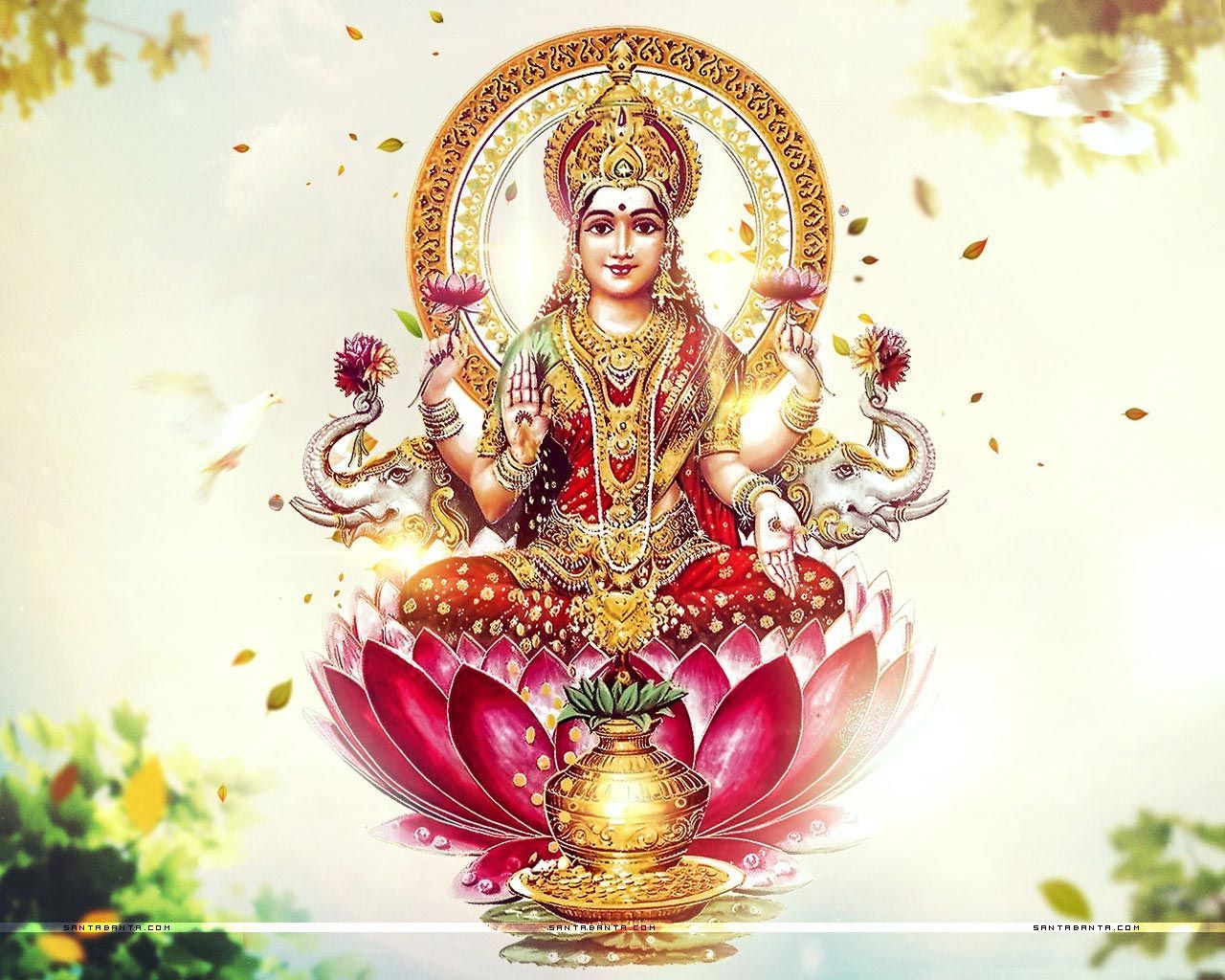
Tulsi is revered as a sacred goddess, while Shaligram is worshipped as a divine form of Lord Vishnu. Their wedding represents an eternal spiritual bond and holds a special place in Vaishnava traditions.
But how did Tulsi become connected with Lord Vishnu, and why is he worshipped in the form of a Shaligram stone? The answer is found in traditional Puranic narratives associated with Vrinda, Jalandhara, Tulasi, and Shankhachuda.
These narratives are related but are not identical in every Purana. Understanding their differences helps us appreciate the story without mixing separate events.
According to a well-known traditional account, Jalandhara was a powerful Asura whose strength made him a formidable opponent of the Devas. His wife Vrinda was known for her unwavering devotion and fidelity.
Her devotion was closely connected with Jalandhara's extraordinary protection. As long as Vrinda's vow remained unbroken, Jalandhara could not easily be defeated.
With his power increasing, Jalandhara became involved in a conflict with the Devas. His growing strength eventually brought him into opposition with Lord Shiva.
The Devas were troubled by Jalandhara's growing power. They understood that defeating him would not be easy while the spiritual protection associated with Vrinda's devotion remained intact.
In the traditional telling, Lord Vishnu became involved in the conflict. He took the appearance of Jalandhara and approached Vrinda.
Believing that her husband had returned, Vrinda initially received the person before her as Jalandhara. However, she eventually realised that the person was not her husband but Lord Vishnu himself.
The discovery deeply distressed her. Her faith and trust had been deceived, and she confronted Lord Vishnu over what had happened.
This episode is remembered as a difficult moment in the narrative, raising questions about deception, duty, devotion, and the consequences of actions taken in the name of a larger purpose.
Hurt by the deception, Vrinda cursed Lord Vishnu. The exact consequence of her curse is described differently in traditional accounts. In the Shiva Purana's account of Vrinda and Jalandhara, the curse is associated with Vishnu experiencing separation from his wife.
Vrinda's story is also connected with the defeat of Jalandhara after the protection associated with her vow was broken.
This Vrinda–Jalandhara narrative is an important part of the traditional background associated with Tulsi Vivah. However, the origin of Vishnu's Shaligram form is described more directly in another Puranic account, that of Tulasi and Shankhachuda.
The Devi Bhagavata Purana, in its ninth book, describes the story of Tulasi and the Asura Shankhachuda. This narrative explains the connection between Tulasi, Lord Vishnu, the Gandaki River, and the Shaligram stones.
Tulasi was the devoted wife of Shankhachuda. Her faithfulness and spiritual power were closely associated with her husband's protection.
Shankhachuda possessed extraordinary strength, and his protection was connected with his armour and the unbroken chastity of Tulasi. His growing power led to a conflict with the Devas and Lord Shiva.
As the battle continued, the Devas sought Lord Vishnu's help. According to the Devi Bhagavata Purana, Vishnu first obtained Shankhachuda's protective armour by appearing in the guise of a Brahmin.
After obtaining the armour, Lord Vishnu assumed Shankhachuda's appearance and went to Tulasi.
Tulasi believed that her husband had returned from the battlefield. She welcomed him with happiness and respect, believing that the conflict had ended and that her husband was safe.
However, Tulasi soon noticed that something was different. The person before her did not seem to be her husband in the way she had known him.
She questioned him and gradually discovered the truth: the person who had come to her was Lord Vishnu, appearing in Shankhachuda's form.
Tulasi was deeply hurt. She realised that her trust had been broken through deception and that her marital vow had been violated.
Overcome with grief and anger, Tulasi confronted Lord Vishnu. She questioned how he could use deception to destroy her chastity and bring about her husband's death.
In her anguish, she cursed Lord Vishnu to become stone. This curse is a central event in the Devi Bhagavata Purana's account of Tulasi and Shankhachuda.
Lord Vishnu then revealed his divine form and explained the spiritual significance of the events that had taken place.
Lord Vishnu told Tulasi that her devotion and spiritual efforts would not go unrewarded. He explained that she would receive a divine form and remain closely connected with him.
According to the Devi Bhagavata Purana, Tulasi's earthly body became associated with the sacred Gandaki River, while her hair became sacred Tulasi plants.
Thus, Tulasi became revered as a sacred plant in Hindu worship. Her leaves and flowers came to hold a special place in the worship of Lord Vishnu.
Lord Vishnu also accepted Tulasi's curse to become stone. He declared that he would reside in stone form near the banks of the Gandaki River.
These sacred stones became known as Shaligram or Shalagrama Shilas. They are worshipped as a form of Lord Vishnu, and devotees traditionally regard the divine presence of Hari as residing in them.
This is the Puranic connection between Tulasi, the Gandaki River, and the Shaligram form of Lord Vishnu.
Tulsi holds a special place in the worship of Lord Vishnu. Her leaves are traditionally offered during Vishnu puja and Shaligram worship.
The Devi Bhagavata Purana describes Tulasi as especially sacred among leaves and flowers used in divine worship. It also establishes the close relationship between Tulasi and Shaligram.
For devotees, offering a Tulsi leaf to Shaligram is an expression of devotion, reverence, and the sacred bond between Tulsi Mata and Lord Vishnu.
The annual Tulsi Vivah ceremony commemorates the divine relationship between Tulsi Mata and Lord Vishnu in his Shaligram form.
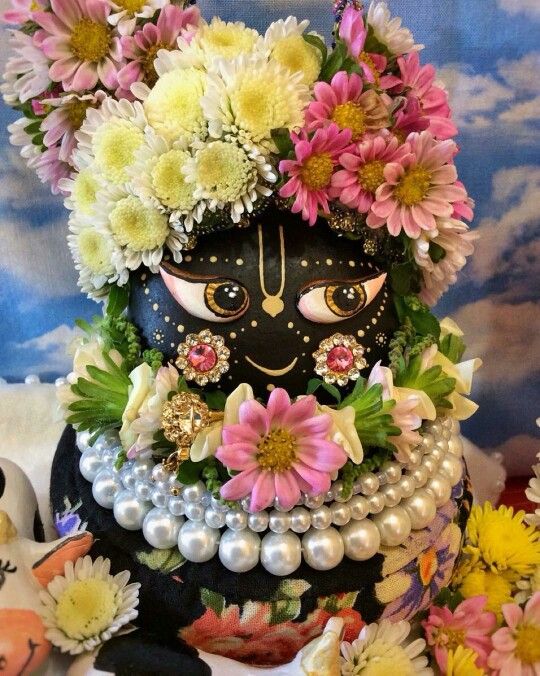
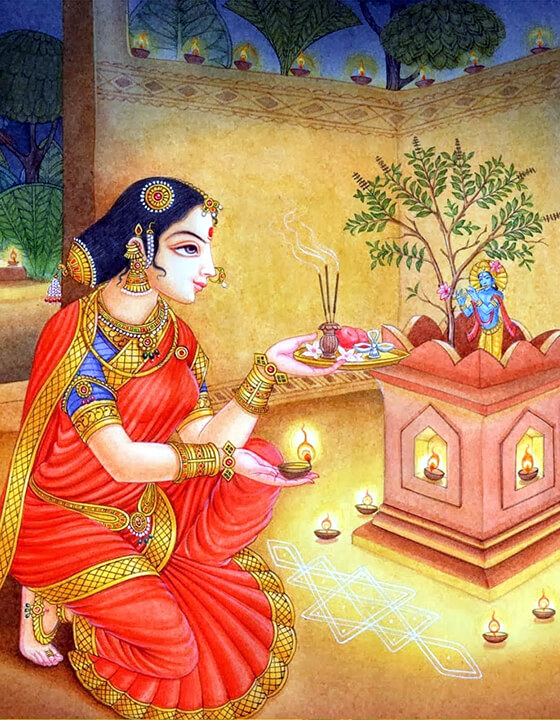
During the ceremony, the Tulsi plant is worshipped as the bride, while the Shaligram stone represents the groom. The wedding is performed with rituals inspired by a traditional Hindu marriage.
Devotees decorate the Tulsi plant, prepare a small wedding mandap, offer flowers and sacred items, and perform the wedding rituals according to their family customs.
The ceremony is a celebration of devotion, divine companionship, and the sacred place of Tulsi in Vaishnava worship.
Tulsi Vivah is traditionally celebrated during the Kartik month, after Lord Vishnu's awakening from his four-month cosmic rest. This occasion is associated with Dev Uthani Ekadashi, also known as Prabodhini Ekadashi.
Different regions and families observe Tulsi Vivah on different days. Common observances include:
The date should be confirmed according to the local Panchang and the tradition followed by the family.
Tulsi Vivah Katha is traditionally read or heard during the Tulsi Vivah puja. It is part of the devotional observance in which devotees worship Tulsi Mata and Lord Vishnu in his Shaligram form.
Families generally listen to or recite the Katha during the wedding ceremony, alongside the traditional rituals, prayers, and aarti. The exact order may vary by region and household custom.
Devotees who observe Tulsi Vivah on Dev Uthani Ekadashi or Kartik Shukla Dwadashi generally read the story on the day they perform the wedding.
The stories of Vrinda and Tulasi highlight the importance of sincere devotion and commitment. Their faithfulness is central to the traditional narratives.
The story raises an important question about the consequences of deception. Even when an action is presented as necessary for a larger purpose, the pain experienced by the person who is deceived should not be ignored.
The story is not primarily about a false accusation. It is about deception and the violation of trust. However, it offers a relevant lesson for modern society: we should not judge people or repeat allegations without understanding the facts.
On social media, in families, and in public life, unverified claims can damage a person's dignity and reputation. Before accusing someone, we should examine the evidence, understand the circumstances, and avoid spreading rumours.
The distress experienced by Tulasi reminds readers that trust and personal dignity must be respected. No person's devotion, faith, or relationship should be treated carelessly.
The narrative reminds us that decisions can have consequences beyond the immediate situation. Responsibility means recognising the impact of our actions, not merely focusing on the outcome we want to achieve.
Tulsi Shaligram Vivah Katha is the traditional story associated with the divine relationship between Tulsi Mata and Lord Vishnu in his Shaligram form. It is connected with the stories of Vrinda, Jalandhara, Tulasi, and Shankhachuda.
Vrinda was the devoted wife of Jalandhara in a well-known Puranic narrative. Her unwavering fidelity was associated with Jalandhara's extraordinary strength and protection.
Shankhachuda was an Asura whose story is described in the Devi Bhagavata Purana. He was married to Tulasi, and his protection was connected with his armour and Tulasi's chastity.
According to the Devi Bhagavata Purana, Vishnu assumed Shankhachuda's form and approached Tulasi after obtaining his armour. When Tulasi discovered the deception, she was deeply distressed and cursed Vishnu to become stone.
In the Tulasi–Shankhachuda account, Tulasi cursed Lord Vishnu to become stone. Vishnu accepted the curse and declared that he would reside in stone form near the Gandaki River. These sacred stones are known as Shaligram Shilas.
The Devi Bhagavata Purana describes Tulasi's hair becoming sacred Tulsi plants, while her earthly body became associated with the Gandaki River.
Tulsi Vivah commemorates the sacred relationship between Tulsi Mata and Lord Vishnu in his Shaligram form. Devotees celebrate this divine union through an annual wedding ceremony during the Kartik period.
It is traditionally read or heard during the Tulsi Vivah ceremony, commonly observed on Kartik Shukla Ekadashi or Dwadashi, depending on regional and family customs.
No. They are separate Puranic narratives with related themes. The Vrinda–Jalandhara story is described in the Shiva Purana, while the Devi Bhagavata Purana describes Tulasi and Shankhachuda and explains the curse connected with Shaligram. Popular Tulsi Vivah retellings sometimes combine elements of both stories.
The story of Tulsi and Shaligram brings together devotion, sacrifice, divine transformation, and the sacred traditions of Hindu worship. Through the narratives of Vrinda, Jalandhara, Tulasi, and Shankhachuda, devotees understand the spiritual connection between Tulsi Mata and Lord Vishnu.
Every year, Tulsi Vivah gives devotees an opportunity to celebrate this sacred relationship through prayers, rituals, and the ceremonial marriage of Tulsi with Shaligram.
Beyond the ritual, the story encourages us to value devotion, respect personal dignity, avoid deception, and take responsibility for our actions.
May Tulsi Mata and Lord Vishnu bless every home with devotion, peace, harmony, and prosperity.